
Your Garage Door Is the Hardest-Working Part of Your Home
Think about it — your garage door opens and closes an average of 1,500 times per year. That's more use than your front door, your back door, and probably every window in your house combined. Yet most homeowners in Santa Cruz never give their garage door a second thought until it stops working entirely.
We get it. When something works fine, there's no reason to worry about it. But garage doors are complex mechanical systems with springs under extreme tension, cables, rollers, tracks, and an electric opener all working together in precise coordination. Without regular maintenance, small issues turn into expensive repairs — or worse, safety hazards.
So how often should you actually service your garage door? Let's break it down.
The Short Answer: At Least Once a Year
At a minimum, your garage door should receive a professional maintenance service once per year. Think of it like an annual checkup for your car — a trained technician inspects all the components, lubricates moving parts, tightens hardware, and identifies small problems before they become big ones.
For most homeowners in Santa Cruz, Capitola, and Scotts Valley, an annual tune-up is sufficient. However, there are situations where you might want to schedule service more frequently:
- Heavy daily use: If your household opens and closes the garage door four or more times per day, consider service every six months.
- Coastal proximity: Living near the ocean means salt air exposure, which accelerates corrosion on metal components. Many of our customers in Santa Cruz and Aptos deal with this, and twice-yearly service helps stay ahead of rust and wear.
- Older garage doors: If your door or opener is more than 10 years old, more frequent inspections can catch age-related issues early.
- After a storm or earthquake: Significant weather events or seismic activity can knock tracks out of alignment or damage components that aren't immediately visible.
What Does a Professional Garage Door Tune-Up Include?
A proper maintenance visit isn't just someone glancing at your door and calling it good. Here's what a thorough garage door service should cover:
Visual Inspection
The technician examines every visible component — springs, cables, rollers, hinges, tracks, panels, and weatherstripping — looking for signs of wear, damage, or corrosion.
Spring Assessment
Garage door springs carry the full weight of the door and are under tremendous tension. A professional checks for signs of fatigue, rust, or elongation that indicate the springs are nearing the end of their lifespan. Catching a worn spring early can prevent a sudden break, which often leaves your door stuck and inoperable.
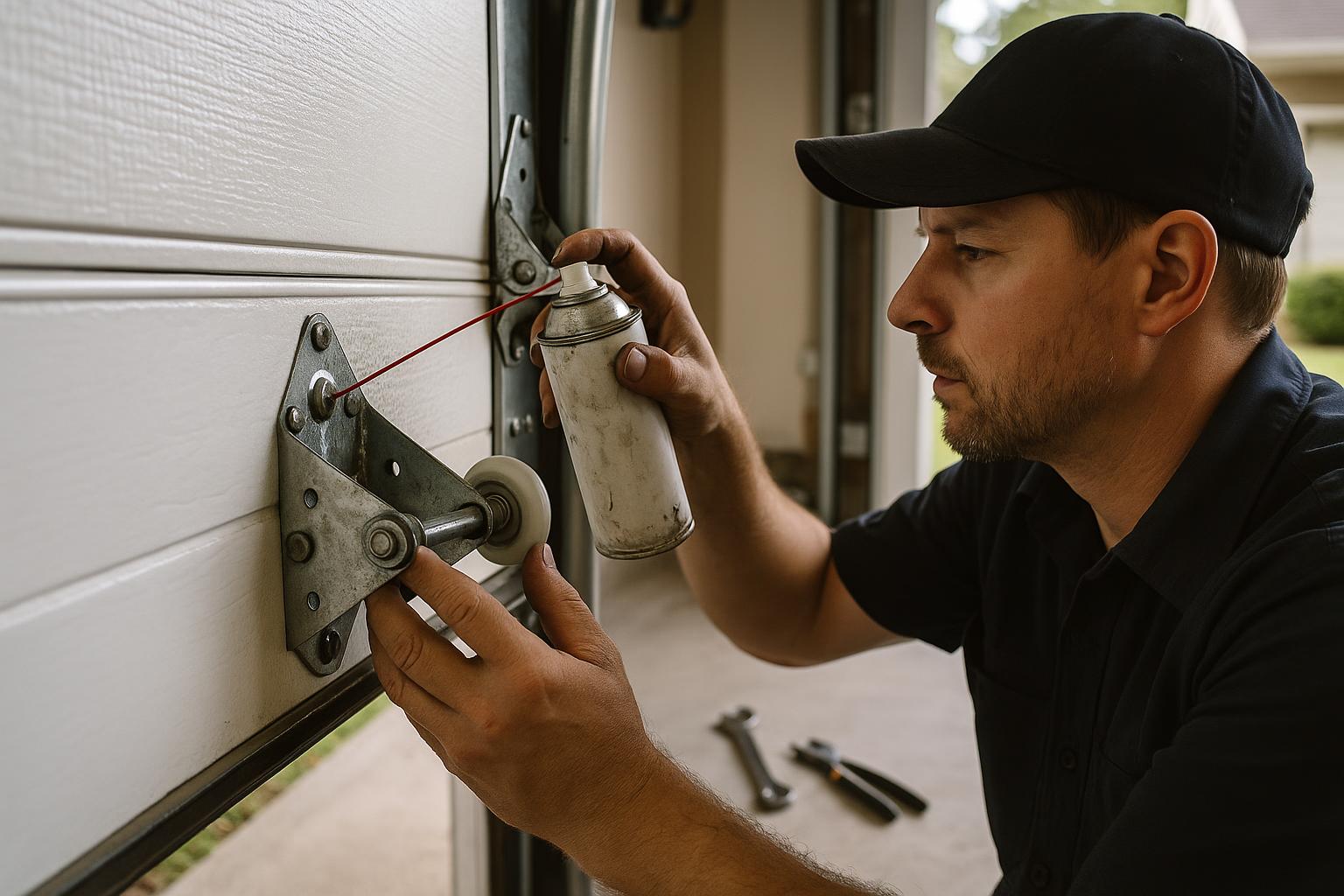
Lubrication
All moving parts — including rollers, hinges, spring coils, and the opener chain or screw — need proper lubrication to reduce friction and noise. The right lubricant matters too. A technician will use garage-door-specific products, not the WD-40 you might grab from the shelf.
Hardware Tightening
The constant vibration of a garage door cycling up and down loosens bolts and brackets over time. During a tune-up, every piece of mounting hardware gets checked and tightened.
Track Alignment and Cleaning
Even slightly misaligned tracks cause the door to bind, scrape, or operate unevenly. The technician checks alignment and clears any debris from the tracks.
Opener Testing
Your garage door opener's safety features — including the auto-reverse mechanism and photoelectric sensors — are tested to make sure they're functioning correctly. This is especially important if you have children or pets.
Balance Test
A balanced garage door should stay in place when opened halfway and released manually. If it drifts up or crashes down, the spring tension needs adjustment. An unbalanced door puts extra strain on your opener and shortens its lifespan.
Weatherstripping Check
The rubber seals along the bottom and sides of your door keep out rain, wind, dust, and pests. In our Santa Cruz County climate, weatherstripping can dry out and crack, so it's checked and replaced if needed.
What You Can Do Between Professional Visits
You don't need to be a garage door expert to keep things running smoothly between annual service appointments. Here are a few simple things you can do yourself:
- Listen for unusual sounds. Grinding, squealing, or popping noises are early warning signs that something needs attention.
- Watch the door operate. It should move smoothly and evenly. Jerky movement, hesitation, or shaking suggests a problem with the tracks, rollers, or springs.
- Keep the tracks clear. Wipe down the inside of the tracks occasionally to remove dirt and cobwebs. Don't apply lubricant to the tracks themselves — that can cause the rollers to slide instead of rolling properly.
- Test the auto-reverse. Place a roll of paper towels on the ground in the door's path and press the close button. The door should reverse immediately upon contact. If it doesn't, call a professional right away.
- Look at the springs and cables. You should never touch or adjust these yourself, but a visual check for rust, fraying, or gaps in the spring coils can help you spot trouble early.
The Cost of Skipping Maintenance
We understand that scheduling maintenance for something that seems to be working fine can feel unnecessary. But consider the math. A professional tune-up typically costs a fraction of what you'd pay for an emergency spring replacement or a full opener repair.
More importantly, a sudden garage door failure is more than an inconvenience. If your door won't open on a Monday morning in Soquel or Watsonville, you could be late for work, unable to access your vehicle, or left with an unsecured home. Emergency service calls cost more and require fitting you into an already packed schedule.
Regular maintenance extends the life of your entire garage door system — springs, opener, panels, and all. Most garage door springs last 10,000 cycles, but proper lubrication and balance adjustments can push that number significantly higher.
When to Call for Service Between Tune-Ups
Even with regular maintenance, things can go wrong. Call a professional if you notice any of the following:
- The door won't open or close completely
- You hear a loud bang from the garage (likely a broken spring)
- The door is visibly crooked or off-track
- The opener runs but the door doesn't move
- You see frayed cables or broken hardware
These issues can worsen quickly and pose safety risks, so don't wait for your next scheduled service.
Keep Your Garage Door in Top Shape
Your garage door is one of the largest moving parts of your home and one of the most used entry points. Giving it a little attention once a year goes a long way toward keeping it safe, quiet, and reliable.
If it's been a while since your last garage door service — or if you've never had one — now is a great time to schedule a maintenance visit. At Santa Cruz Garage Door Pro, we serve homeowners throughout Santa Cruz County, from Scotts Valley to Watsonville, and we're happy to help you get on a regular maintenance schedule that protects your investment and gives you peace of mind.