
Your Garage Door Shouldn't Sound Like That
You press the button, and instead of a smooth, quiet operation, your garage door groans, squeals, rattles, or pops its way open. If you're a homeowner in Santa Cruz, you've probably grown so used to the noise that you barely notice it anymore. But here's the thing — a properly functioning garage door should operate relatively quietly. When it doesn't, those sounds are trying to tell you something.
Garage door noises are one of the most common complaints we hear from customers, and in almost every case, the sound points directly to a specific problem. Some issues are minor and easy to fix. Others are early warnings of a failure that could leave you stuck or, worse, put your family at risk.
Let's break down the most common garage door noises, what causes them, and what you should do about each one.
Grinding and Scraping Sounds
A grinding or scraping noise usually means metal is rubbing against metal somewhere it shouldn't be. The most common culprits are:
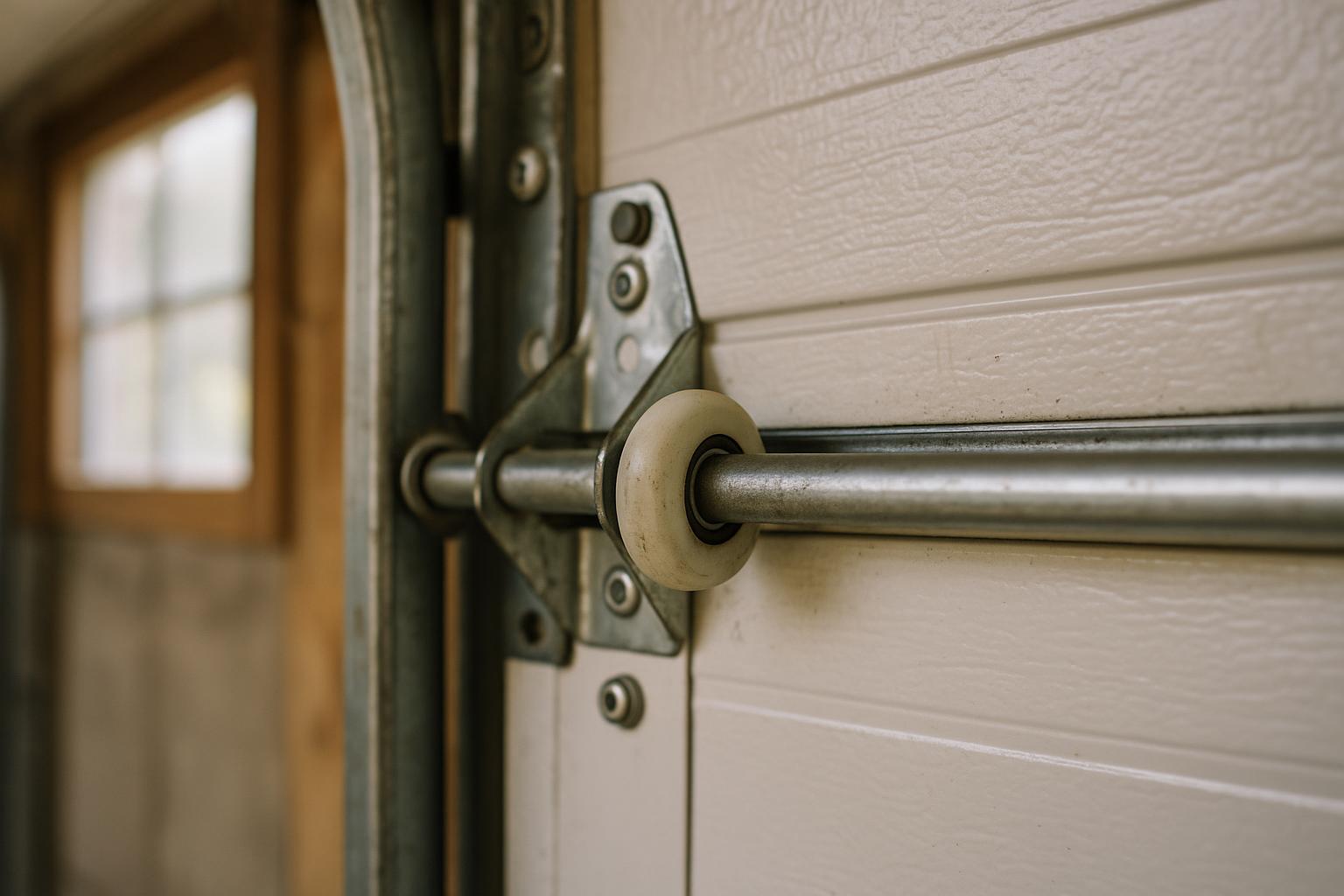
- Worn rollers: Garage door rollers guide the door along the tracks. Over time, especially with steel rollers, they wear down and start grinding against the track. Nylon rollers are quieter and last longer, and upgrading to them is one of the best investments you can make for a quieter garage door.
- Misaligned tracks: If the vertical or horizontal tracks have shifted even slightly, the door can scrape as it moves. This is especially common in older homes around Santa Cruz where settling and seismic activity can gradually shift the framing.
- Bent track sections: A track that's been dented or bent — from a bump with a car, a bicycle, or stored items — will cause the door to grind every time it passes that point.
If you hear grinding, take a look at the rollers and tracks. You can visually inspect for obvious wear, debris, or misalignment. But don't try to adjust the tracks yourself — they're under tension and connected to the door's counterbalance system, so improper adjustments can create bigger problems.
Squealing and Screeching
High-pitched squealing is one of the most irritating garage door sounds, and it's often one of the easiest to address. Common causes include:
- Lack of lubrication: Hinges, rollers, springs, and bearing plates all need periodic lubrication. The salty, humid air along the Santa Cruz coast accelerates corrosion and dries out moving parts faster than you might expect.
- Worn-out hinges: Each panel of your garage door is connected by hinges. When the hinge holes elongate from wear, the hinge starts to bind and squeal during operation.
- Torsion spring friction: The torsion springs above your door coil and uncoil with every cycle. Without proper lubrication, the coils rub against each other and produce a loud screeching sound.
A quick fix for squealing is to apply a garage door-specific lubricant (not WD-40, which is a solvent, not a lubricant) to the springs, hinges, rollers, and bearing plates. Use a silicone-based or lithium-based spray designed for garage doors. If the noise persists after lubrication, the parts may be worn beyond what lubrication can fix.
Rattling and Vibrating
A rattling garage door often sounds worse than it is, but it still deserves attention. Here's what typically causes it:
- Loose hardware: Your garage door cycles up and down over a thousand times a year. That constant vibration loosens nuts, bolts, and screws over time. A simple tightening of the hardware can eliminate the rattle entirely.
- Loose chain or belt on the opener: If you have a chain-drive opener, a loose chain will slap and rattle during operation. Belt-drive openers can develop a similar issue if the belt stretches.
- Unsecured opener mounting: The opener unit itself can vibrate against the ceiling if the mounting brackets have loosened. This is common in garages with exposed rafters.
You can carefully tighten most visible nuts and bolts with a socket wrench. However, avoid adjusting anything connected to the cable drums, springs, or bottom brackets — these components are under extreme tension.
Popping and Banging
A loud pop or bang when the door starts moving is more concerning. This usually indicates:
- Torsion spring issues: Springs that are binding, improperly wound, or nearing the end of their lifespan can pop loudly as they engage. This is a warning sign you shouldn't ignore — a spring failure can be dangerous.
- Panel or track problems: If a section of the door is catching and then releasing, it can produce a banging sound. This often points to a track obstruction or a panel that's starting to warp.
Popping and banging sounds warrant a professional inspection. These noises are often associated with components under high tension, and diagnosing them requires experience and the right tools.
Humming Without Movement
If you press your garage door button and hear the motor hum but the door doesn't move, the problem is usually with the opener or the connection between the opener and the door:
- Stripped gears in the opener: The nylon gears inside many garage door openers wear down over time. When they strip, the motor runs but can't transfer power to the drive mechanism.
- Disconnected trolley: The emergency release cord may have been pulled, disconnecting the trolley from the chain or belt. This is an easy fix — simply reconnect the trolley.
- Broken springs: If the springs have broken, the opener motor may not have enough power to lift the door. The motor will hum and strain, but the door won't budge. Running the opener in this condition can burn out the motor.
When to DIY and When to Call a Professional
Some garage door noise fixes are safe for homeowners to handle:
- Applying lubricant to hinges, rollers, and springs
- Tightening loose bolts and screws on the door panels and tracks
- Reconnecting a disconnected trolley on the opener
- Clearing debris from the tracks
However, you should call a professional for anything involving:
- Spring adjustment or replacement
- Track realignment
- Cable repair
- Opener gear replacement
- Any component under high tension
Garage door springs and cables store an enormous amount of energy. Attempting repairs on these components without proper training and tools can result in serious injury.
Keep Your Garage Door Quiet and Reliable
Strange noises are your garage door's way of asking for help. Addressing them early almost always costs less than waiting for a full breakdown. And in a place like Santa Cruz, where the coastal climate puts extra stress on metal components, staying ahead of maintenance is especially important.
If your garage door has started making sounds you can't explain — or sounds you've been ignoring for a while — Santa Cruz Garage Door Pro can diagnose the issue and get your door running quietly again. We serve homeowners across Santa Cruz, Capitola, Scotts Valley, Aptos, Soquel, and Watsonville with honest assessments and reliable repairs.
Give us a call and let's figure out what your garage door is trying to tell you.