
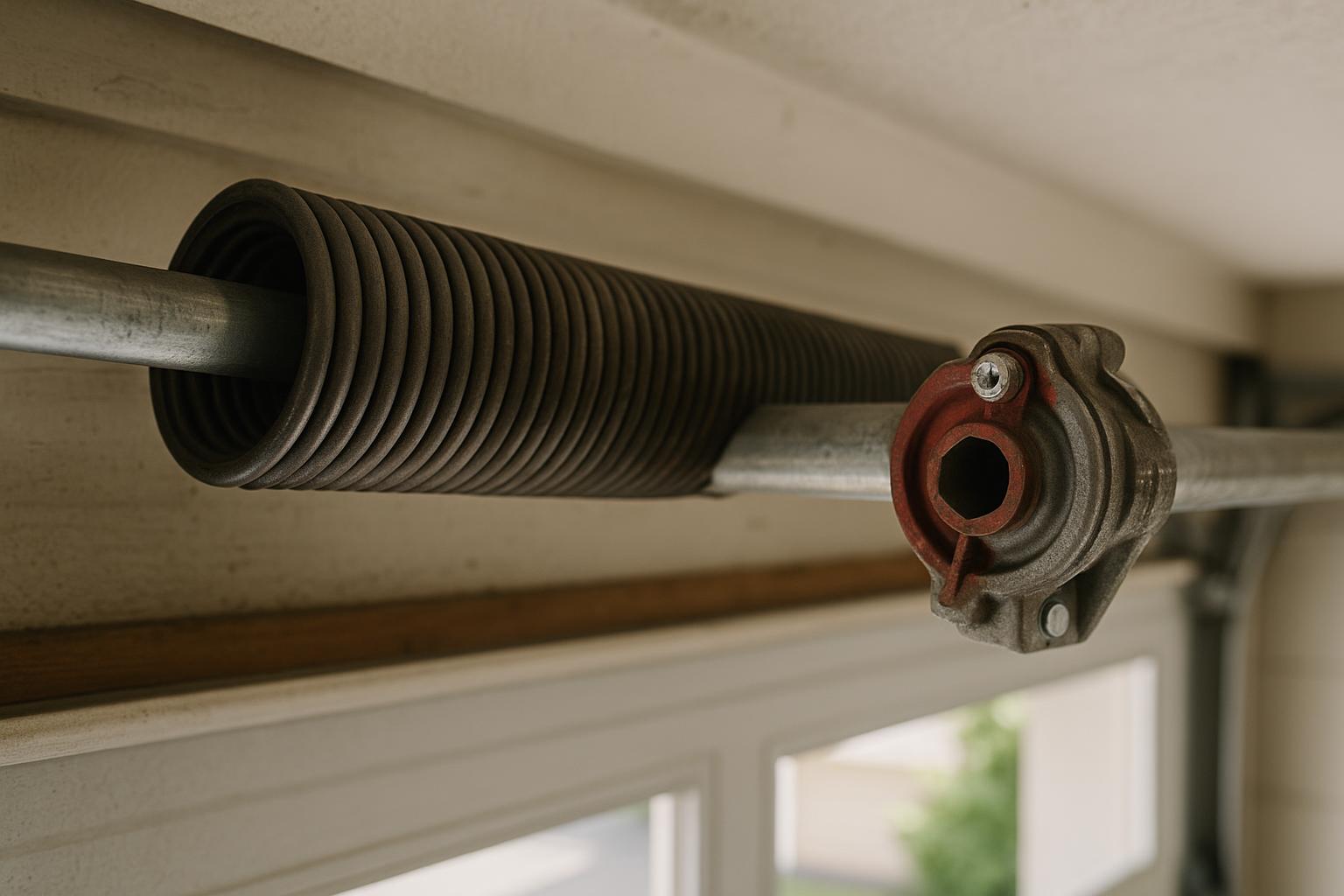
Your Garage Door Springs Are Trying to Tell You Something
If you've ever had a garage door spring snap, you know it's not subtle. The loud bang, the door that suddenly won't budge, the scramble to figure out what just happened — it's one of the most common garage door emergencies we respond to here in Santa Cruz. But here's the thing: springs almost never break without warning. There are clear signs that your springs are wearing out, and catching them early can save you from an inconvenient — and potentially dangerous — situation.
At Santa Cruz Garage Door Pro, we replace worn and broken springs every week. And almost every time, the homeowner tells us they noticed something was off but didn't know what to look for. This post will change that.
What Do Garage Door Springs Actually Do?
Before we get into the warning signs, it helps to understand what springs do and why they matter so much. Your garage door is heavy — most residential doors weigh between 130 and 350 pounds. The springs are what counterbalance that weight, making it possible for your opener (or your arms) to lift the door with minimal effort.
There are two main types of springs:
- Torsion springs — mounted on a metal shaft above the door opening. These are the most common type in Santa Cruz homes.
- Extension springs — mounted along the horizontal tracks on either side of the door. These are more common on older or lighter doors.
Both types are under enormous tension, which is why spring replacement is one of the most dangerous garage door repairs and should always be handled by a professional.
7 Warning Signs Your Springs Are Wearing Out
1. The Door Feels Heavier Than Usual
Try this: disconnect your garage door opener by pulling the emergency release cord, then manually lift the door. A properly balanced door with healthy springs should lift smoothly and feel relatively light. If it feels noticeably heavy or you're straining to get it open, your springs are losing tension and nearing the end of their lifespan.
2. The Door Opens Unevenly or Crooked
If one side of your garage door rises faster than the other, it often means one spring has weakened more than its counterpart. This is especially common with extension spring systems where each side operates somewhat independently. An uneven door puts stress on the tracks, rollers, and opener, which can lead to additional damage if not addressed.
3. You Hear Squeaking or Grinding Noises
Some noise is normal, but loud squeaking, popping, or grinding sounds when the door moves can indicate that the springs are corroded, dry, or developing stress fractures. The coastal air in Santa Cruz accelerates corrosion on metal components, so springs in our area tend to wear faster than in drier climates.
4. The Door Slams Shut Instead of Closing Slowly
Healthy springs control the speed at which your door closes. When springs lose their tension, the door may drop faster than it should or slam the last few inches to the ground. This is a safety hazard, especially if you have kids or pets who might be near the door.
5. Visible Gaps in the Spring Coils
Take a look at your torsion spring above the door. When a spring is in good condition, the coils are tightly wound with no visible gaps. If you see a noticeable gap or separation between coils — even a small one — the spring has stretched and is close to failure. This is one of the most reliable visual indicators that replacement is needed soon.
6. The Door Won't Stay Open Halfway
A well-balanced garage door should stay in place when you manually open it to about the halfway point and let go. If it slides down or shoots up, the spring tension is off. This simple test takes about 10 seconds and gives you a clear picture of your spring health.
7. Your Springs Are More Than 7-10 Years Old
Most standard garage door springs are rated for about 10,000 cycles — one cycle being one full open and close. For a household that opens and closes the garage door four times a day, that works out to roughly seven years. If your springs are approaching or past that age, they're living on borrowed time, even if they seem fine right now.
Why You Shouldn't Wait for Springs to Break
We understand the temptation to put off a repair when things are still technically working. But there are several good reasons to replace worn springs before they snap:
- Safety: A breaking torsion spring releases a tremendous amount of stored energy. While modern safety cables help contain extension springs, the force involved can still cause injury or property damage.
- Avoiding secondary damage: Worn springs put extra strain on your garage door opener, cables, and other hardware. Replacing springs proactively is far cheaper than replacing springs plus a burned-out opener.
- Convenience: A broken spring means your car is stuck in the garage until a technician can get to you. Scheduling a replacement on your terms is always better than an emergency call.
- Cost: Emergency service calls cost more than planned appointments. Getting ahead of the problem saves money.
Can You Replace Garage Door Springs Yourself?
We strongly advise against DIY spring replacement. Garage door springs are under extreme tension, and improper handling can result in serious injury. Every year, emergency rooms across the country treat people who attempted this repair without the proper tools, training, or experience. Professional technicians use specialized winding bars and follow strict safety procedures to ensure the job is done correctly and safely.
What to Expect During a Spring Replacement
When you call Santa Cruz Garage Door Pro for a spring replacement, here's what the process typically looks like:
- We inspect your entire spring system, including cables, drums, and bearings.
- We recommend the right spring type and size for your specific door — getting this wrong can cause major problems.
- We safely remove the old springs and install new ones.
- We balance the door and test it through several full cycles.
- We lubricate all moving parts and check the opener for proper operation.
The whole process usually takes about an hour for a standard residential door. We also offer upgraded high-cycle springs that last significantly longer — a smart investment for homeowners in Capitola, Scotts Valley, Aptos, Soquel, and throughout Santa Cruz County who want to avoid dealing with this issue again anytime soon.
Don't Ignore the Warning Signs
Your garage door springs work hard every single day, and they won't last forever. The good news is that they give you plenty of warning before they fail. Pay attention to how your door sounds, feels, and moves. If something seems off, it probably is.
If you've noticed any of the signs we've described, or if your springs are getting up there in age, give us a call. Santa Cruz Garage Door Pro provides fast, honest spring replacement service throughout Santa Cruz and the surrounding communities. We'll get your door balanced, safe, and running smoothly — before a small problem turns into a big one.