
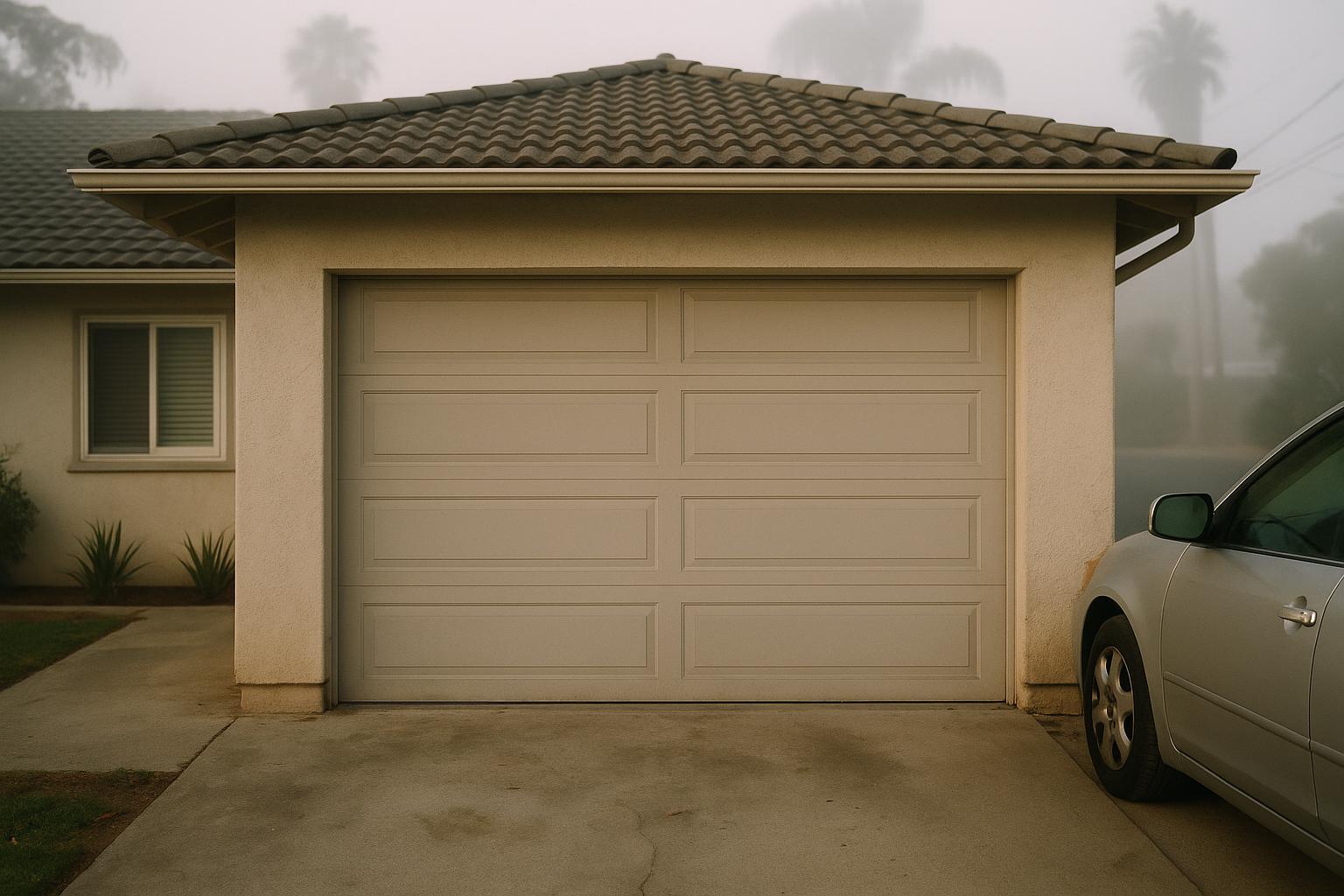
You're Running Late and Your Garage Door Won't Budge
It's a familiar nightmare for homeowners across Santa Cruz: you're heading out for your morning commute, you press the button on your garage door opener, and nothing happens. Or maybe the motor hums but the door doesn't move. Or perhaps it lifts a few inches and stops dead.
A garage door that refuses to open in the morning is one of the most common — and most frustrating — problems we see. The good news is that some causes are simple enough to troubleshoot on your own. The bad news is that others require professional repair. Either way, knowing what you're dealing with saves you time, money, and stress.
Here's a step-by-step guide to figuring out why your garage door won't open and what to do about it.
Check the Obvious Things First
Before you assume the worst, rule out the simple stuff. You'd be surprised how often the fix is something basic.
- Dead remote batteries: If your wall-mounted button works but the remote doesn't, swap in fresh batteries. This is the number one cause of "my garage door won't open" calls that turn out to be nothing.
- The door is locked: Many garage doors have a manual lock — a handle or slide bolt on the inside. If someone locked it from inside the garage, the opener will strain against the lock and fail to open the door. Check for this before anything else.
- Power outage or unplugged opener: Look at the opener unit on the ceiling. Is the light on? If not, check whether the unit is plugged in and whether your outlet has power. Coastal weather in Santa Cruz can sometimes trip breakers overnight, especially during winter storms.
- The opener is in manual mode: If the emergency release cord has been pulled (it's usually a red handle hanging from the opener rail), the door is disconnected from the opener. Re-engage it by pulling the cord back toward the opener or manually sliding the door up until the trolley reconnects.
Temperature and Weather-Related Causes
Santa Cruz enjoys mild weather compared to much of the country, but that doesn't mean your garage door is immune to temperature-related issues. Morning temperatures, especially in Scotts Valley and the higher elevations around the Santa Cruz Mountains, can dip low enough to cause problems.
Cold-Stiffened Lubricant
The grease on your springs, rollers, and hinges can thicken in cooler temperatures. When lubricant gets stiff, the door becomes harder to move, and your opener may not have enough power to lift it. This is especially common with older openers that have lost some of their lifting strength over the years.
Moisture and Seal Issues
Morning dew and overnight moisture can cause the bottom seal of your garage door to stick to the concrete floor, particularly if the seal is old or damaged. You might hear the motor running but the door won't break free. In most cases, gently pulling the door up manually will release it. If this happens regularly, it's time to replace the bottom seal.
Metal Contraction
Metal tracks and springs contract slightly in cold weather. While this is rarely dramatic enough on its own to stop a door from opening, it can compound other issues — a track that's already slightly misaligned, for example, may bind up on a cold morning when it works fine by afternoon.
Mechanical Problems That Need Attention
If the simple fixes don't solve the problem, you're likely dealing with a mechanical issue. These are the most common ones we diagnose when homeowners in Santa Cruz and surrounding areas like Capitola, Aptos, and Soquel call us about doors that won't open.
Broken Torsion Springs
This is the big one. If you hear a loud bang from the garage — sometimes in the middle of the night — and the door won't open the next morning, a torsion spring has almost certainly snapped. Look at the spring mounted above the door. If you see a visible gap in the coil, that's your answer.
Do not attempt to open the door manually or repair the spring yourself. Torsion springs are under extreme tension and can cause serious injury. This is a job for a trained technician with the right tools.
Stripped Gears in the Opener
If you hear the motor running but the door doesn't move, the gears inside your opener may be stripped. This is common in older chain-drive and belt-drive openers. The motor spins, but the worn gears can't transfer that power to the drive mechanism. A grinding or whirring noise is a telltale sign.
Gear replacement is a straightforward repair for a professional, and it's significantly cheaper than replacing the entire opener — though if your unit is more than 15 years old, a full replacement may make more sense in the long run.
Cables Off the Drum
Your garage door uses steel cables wound around drums at the top of the door to lift and lower it evenly. If a cable slips off the drum or frays and breaks, the door will hang crooked or refuse to move. Like springs, cables are under significant tension and should only be handled by a professional.
Track Misalignment or Obstruction
Inspect the metal tracks on both sides of the door. Look for bends, dents, or gaps where the track sections meet. Also check for debris — a small rock, a piece of wood, or even a buildup of dirt can prevent the rollers from traveling smoothly. Minor obstructions you can clear yourself, but bent tracks need professional attention to avoid making the problem worse.
Sensor and Electrical Issues
Modern garage door openers rely on safety sensors — the small units mounted near the floor on either side of the door. If these sensors are misaligned, dirty, or malfunctioning, the opener may refuse to operate.
- Check the sensor lights: Both sensors should show a steady light (usually green on one and amber on the other, depending on the brand). If one is blinking, the sensors are misaligned or obstructed.
- Clean the lenses: Dust, cobwebs, and moisture can block the infrared beam. Wipe both lenses with a clean cloth.
- Check the wiring: Look for loose or damaged wires running from the sensors back to the opener. Rodents sometimes chew through sensor wiring in garages.
Note that sensor issues typically prevent the door from closing rather than opening, but some opener models will lock out all functions if they detect a sensor fault.
When to Call a Professional
Here's a simple rule of thumb: if the problem involves springs, cables, or anything under high tension, call a professional. If the opener motor runs but nothing moves, call a professional. If you've tried the basic troubleshooting steps above and the door still won't open, call a professional.
At Santa Cruz Garage Door Pro, we handle these calls every day across Santa Cruz, Watsonville, and every community in between. We carry common replacement parts on our trucks so most repairs can be completed in a single visit. And if your door fails on a day when you absolutely cannot be late, our emergency service is designed to get you back on track as quickly as possible.
Prevent Morning Surprises with Regular Maintenance
Most garage door failures don't happen out of nowhere. Springs wear out gradually. Lubricant dries up over time. Gears slowly lose their teeth. A professional maintenance visit once or twice a year catches these issues before they leave you stuck in your garage on a Monday morning.
During a maintenance visit, a technician will lubricate all moving parts, inspect springs and cables for wear, test the balance of the door, tighten hardware, and check the opener's safety features. It's a small investment that prevents expensive emergency repairs and extends the life of your entire garage door system.
If your garage door gave you trouble this morning — or if you want to make sure it doesn't — give Santa Cruz Garage Door Pro a call. We'll get it sorted out so you can get on with your day.