
That Frustrating Reverse: What's Really Going On
You press the button on your garage door remote. The door starts its descent, gets most of the way down, and then suddenly reverses direction and goes right back up. You try again. Same thing. Maybe it works on the third attempt, maybe it doesn't. Either way, you're standing in your driveway in Santa Cruz wondering what just happened.
This is one of the most common garage door complaints we hear, and the good news is that it's almost always fixable. The tricky part is that several different issues can cause the same symptom. Let's walk through the most likely culprits so you can understand what's happening and decide whether it's a quick DIY fix or something that needs professional attention.
The Safety Sensors Are Misaligned
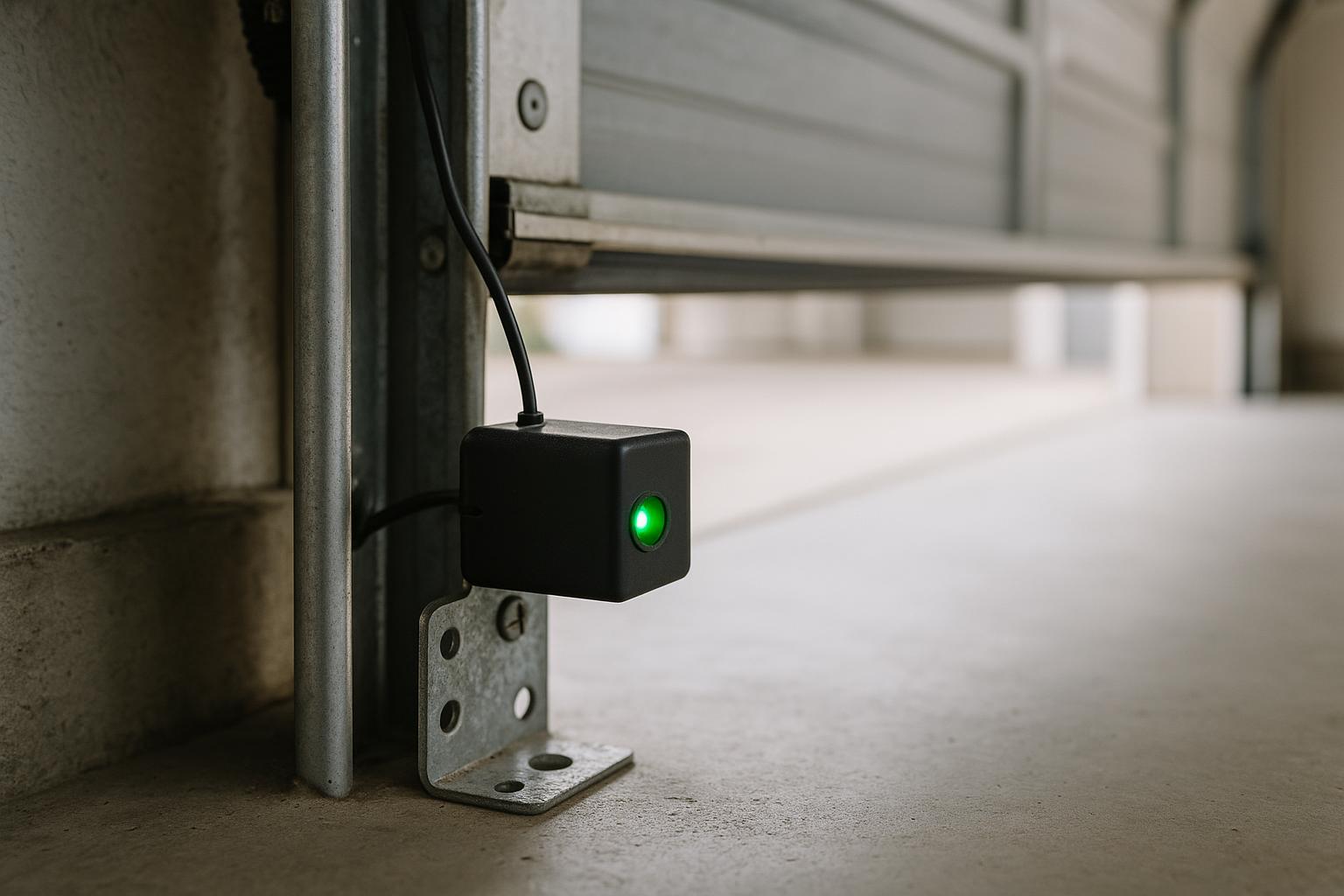
This is the number one reason garage doors reverse before closing completely. Since 1993, all garage door openers sold in the United States have been required to include photo-eye safety sensors. These small devices sit on either side of your garage door opening, about six inches off the ground, and they project an invisible infrared beam between them.
When anything breaks that beam — a child, a pet, a bicycle — the door automatically reverses to prevent injury or damage. It's an essential safety feature. But when the sensors themselves get bumped, shifted, or dirty, they think something is blocking the door even when the path is completely clear.
How to Check Your Sensors
- Look at the indicator lights. Most sensors have small LED lights. Typically, one glows green and the other glows amber or red. If either light is blinking or off, the sensors aren't communicating properly.
- Clean the lenses. Dust, cobwebs, and moisture can accumulate on the sensor lenses, especially in coastal areas like Santa Cruz where fog and marine air are part of daily life. Wipe them gently with a soft cloth.
- Check the alignment. If a sensor has been bumped — maybe by a trash can or a garden tool — it may no longer point directly at its partner. Carefully adjust the bracket until both indicator lights show a steady glow.
- Inspect the wiring. Look for frayed, pinched, or disconnected wires running from the sensors back to the opener unit. Rodents and lawn equipment are common culprits.
The Close-Force Setting Needs Adjustment
Your garage door opener has adjustable force settings that control how much power it uses to open and close the door. If the close-force setting is too low, the opener interprets normal resistance — like the weight of the door itself or slight friction in the tracks — as an obstruction and reverses.
Most openers have small adjustment dials or screws on the back or side of the motor unit, often labeled "force" or "down force." Turning the close-force dial slightly in the increase direction can solve the problem. However, be cautious here. Setting the force too high can override the safety mechanism, which defeats the purpose of having it. If you're unsure, it's better to have a technician calibrate it properly.
The Tracks Are Obstructed or Damaged
Garage door tracks guide the door's rollers as it moves up and down. If the tracks are bent, dented, or have debris lodged in them, the door can bind or stick partway through its travel. When the opener encounters this resistance, it treats it as a blockage and reverses.
Walk along both tracks and look for visible damage, buildup of dirt or leaves, or any objects that may have fallen into the track channel. In neighborhoods around Capitola and Soquel where homes sit under mature trees, we frequently find small branches, leaves, and even acorns jammed in the tracks.
Minor debris can be cleared easily. But if the track itself is bent or warped, don't try to hammer it back into shape. Improperly repaired tracks can cause the door to come off its track entirely, which creates a much bigger and more dangerous problem.
Worn or Broken Springs Are Creating Imbalance
Your garage door springs do the heavy lifting — literally. They counterbalance the weight of the door so the opener motor doesn't have to work as hard. When a spring weakens, stretches, or breaks, the door becomes significantly heavier on one side or overall. The opener struggles against this extra weight and may reverse because it senses too much resistance.
You can test your door's balance by pulling the emergency release cord (usually a red handle hanging from the opener rail) and manually lifting the door to about waist height. Let go carefully. A properly balanced door should stay in place or drift only slightly. If it crashes down or flies up, your springs need attention.
Important safety note: Garage door springs are under extreme tension. A torsion spring on a standard two-car garage door can hold hundreds of pounds of force. Spring replacement is not a DIY job. We strongly recommend calling a professional for any spring-related repairs.
The Travel Limits Are Set Incorrectly
Garage door openers use travel limit settings to know where the door should stop when fully open and fully closed. If the down-travel limit is set too short, the opener thinks the door has reached the floor before it actually has, and the continued movement triggers a reversal.
This issue often appears after a new opener installation or after a power outage resets the unit's memory. Adjusting the down-travel limit involves small incremental changes using the adjustment screws or the opener's digital controls, depending on your model. Your owner's manual will have specific instructions for your unit.
Weather and Temperature Changes
Here in Santa Cruz, we enjoy mild weather compared to much of the country, but temperature swings between warm afternoons and cool, foggy mornings can still affect garage door performance. Metal tracks and components expand and contract with temperature changes, sometimes just enough to create binding that triggers a reversal. Lubricating the tracks, rollers, and hinges with a silicone-based spray twice a year can minimize these seasonal issues.
When to Call a Professional
Some of these fixes — cleaning sensors, clearing debris from tracks, checking indicator lights — are perfectly reasonable for a handy homeowner to tackle. But other issues require experience, specialized tools, and an understanding of the mechanical systems involved.
You should call a garage door technician if:
- Your springs appear damaged, stretched, or broken
- The door is visibly crooked or off-track
- You've tried sensor and force adjustments without success
- You hear grinding, scraping, or popping sounds during operation
- The problem is intermittent and you can't identify the cause
At Santa Cruz Garage Door Pro, we diagnose reversal issues every week across Santa Cruz, Scotts Valley, Aptos, Watsonville, and the surrounding communities. In most cases, we can identify and resolve the problem in a single visit. We'll also inspect the rest of your system to catch small issues before they turn into expensive repairs.
Don't Ignore a Reversing Door
A garage door that won't close properly isn't just annoying — it's a security risk. An open garage is an invitation for theft, and it exposes your home's interior to weather, pests, and intruders. If your door has been reversing and you haven't been able to fix it on your own, reach out to us. We'll get it closing the way it should, safely and reliably.